

Cheek Chin Jawline
DERMAL DISTINCTION
Cosmetic Anti-Ageing & Skin | Balwyn North
CHEEK, JAWLINE, CHIN
Dermal Distinction
ANTI-AGEING & SKIN
Cheek treatment | Balwyn
What happens to cheeks with age?
With the natural ageing process, cheeks lose both volume and projection and start to sag over time. This is because your skeleton, the starts to reduce in size, while your natural fat pads and other soft tissues start to decrease too. The end result is your cheeks slide forwards and downwards on your face.
When cheeks start to sag, your jawline and the skin around your mouth lose tightness and firmness, from lack of tension from above, leading to lower face sag. The hollows under your eyes, known as your tear troughs, may also become more prominent. By affecting other areas of your face, loss of cheek volume and projection can add unwanted contours.
What are some of the cheek landmarks?
Cheeks are usually the widest part of the face. This is an area that make-up artists usually add highlighter to to draw attention to the eyes and mid face.
Cheeks can be divided into 2 parts:
The lateral cheek is the part closest to the ear and jaw angle. This area starts to show subtle signs of ageing, with lines radiating across the cheeks when we smile. Sometimes we can also see lines appearing in front of the ear. This is call the pre-auricular area. We offer treatments for the lateral cheek to address these signs of ageing.
The medial cheek is the part closest to the nose, and comprises of the "apple of the cheek" when we smile. This area is highly mobile, rising and falling as we talk and smile. The medial cheek is where we see the most ageing, where it loses a large volume of fat over time We also offer treatments for the medial cheek at Dermal Distinction.
What is the process for cheek assessment?
The first step before any treatment is a consultation. During the consultation, we will take photos, assess your medical health and history. We will also check that you are ready for treatment, and discuss the different options with you.
There is usually a blend between skin treatments such as peels and laser, and cosmetic medical treatments. These latter treatments will require that we undertake a prescribed treatment plan to suit your face and needs.
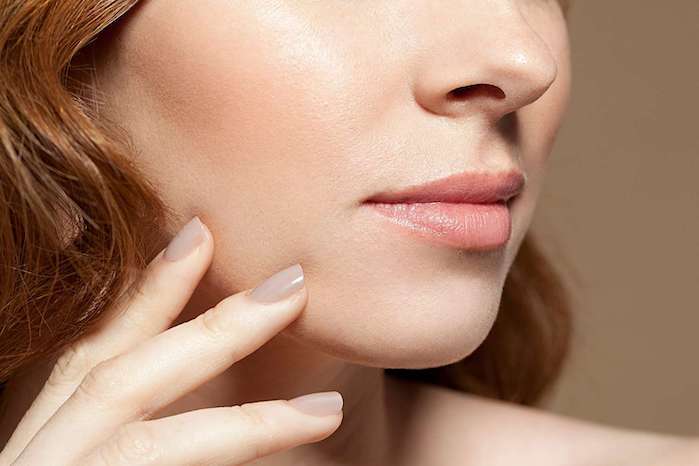
Tear trough | Balwyn
Is a tear trough normal?
Tear troughs are absolutely a normal part of your anatomy. Babies have them, as well as older adults. The area is quite thin and there is very little facial fat sitting in the area, so it is an area that can sometimes show the signs of ageing before other areas. We do offer treatments for the tear trough, which sometimes involves assessment of your grinding habits! This is because those people that grind their teeth, often show increased darkening under their eyes. Other treatments include the use of exosomes, and needling, to more advanced anti-ageing treatments.
Dark under eye circles can be treated also. The skin under the eyes is thin, and loses support early. As it thins, the under eye becomes dark as the blood vessels and ligaments become more visible.
How do you treat under eye bags?
Under eye hollowing and dark circles is a common complaint and one that we commonly treat.
It is important to note that tear trough correction is usually part of an overall facial rejuvenation plan, as it is the result of multiple advanced changes in the face. Tear trough correction usually involves correcting the cheek anatomy to create more support for the under eye area.
Not every patient will be a suitable candidate for the treatment. Sometimes referral to a plastic surgeon can be the ideal option.
Jawline treatment in Balwyn
Why does the jawline change with age?
As we get older, our face undergoes many changes. One of the most structural and impactful changes are in the lower face. Our mandible (our lower jaw) starts to thin and become less dominant. When the mandible is less supportive, our jowls begin to appear and there is sagging of the skin around the jawline and neck.
By targeting the jawline with different treatments, we can improve the facial profile, create definition and structure. Of course you will need a cosmetic consultation to determine which treatment is best for you.
Should I have treatment?
This is very much up to you. If you have been thinking about treatment for a while, the first place to start is making a time for a cosmetic consultation with our cosmetic health practitioner. During this visit, we will discuss you and your needs. Treatment options vary widely, so you will be given time to think through what treatment you would like. Sometimes, you may opt for skin treatments such as laser to improve skin health and condition. Other people may prefer cosmetic medical treatment. We offer all of these treatments at Dermal Distinction.
Chin treatments in Balwyn
Who is suitable for chin treatment?
Chins make up a structural component of our profile, which adds to the overall aesthetic of the face. Where the chin is receded or weak in appearance, the face often looks unbalanced. Sometimes the chin point might be asymmetric or a little too square. These are some of the reasons why you might be suitable for treatment.
Cosmetic Consultation
Pricing and Gallery
To commence the consultation process, view our pricing and before and after gallery, please call us on (03) 98597859, or email us so that we may send you a welcome information pack.
In accordance with guidelines set out by TGA, we can not display our pricing about cosmetic medical treatment, or any before and after photos. When you attend for your consultation, we will provide a good guide of the results you may achieve, along with details of treatment, costs and timelines.
Book a consult
Let's get you started on your treatment. We will start with a thorough consultation to see what type of skin treatments are right for you.